
Every organiser has been there. A booth gets listed, enquiries come in, and then everything grinds to a halt because of a clunky form, a payment link that does not work, or an email thread that goes cold. The gap between interest and confirmed booking is where most events lose revenue, and it usually comes down to one thing: the platform being used to manage bookings. Choosing the right event booking system is not just a back-office decision anymore. It directly decides how many enquiries actually turn into paying exhibitors and attendees.
Most organisers only think about this after they have been burned once. They pick a tool because it is cheap or familiar, only to discover months later that it cannot handle real-time seat availability, or that vendors are stuck sending payment proof over email. A good booking platform should feel invisible to the person using it. If someone has to think twice about how to complete a booking, that is a lead lost, not just a minor inconvenience.
Here is where most platforms fall short, and what to check before picking one for your next expo.
Start With the Booking Journey, Not the Feature List
Most people evaluating a booking platform start by comparing feature lists, which is the wrong place to start. The better approach is to walk through the actual booking journey a customer or exhibitor takes, from the moment they land on a page to the moment they receive confirmation.
- If there are more than three or four steps between interest and payment, conversions will drop, no matter how good the underlying features are
- A platform that lets someone see availability, pick a slot or stall, and pay, all in one flow, will always outperform one that requires switching between a form, an email, and a payment gateway
Real-Time Availability Changes Everything
One of the biggest differences between systems that convert and those that do not is whether they show real-time availability. An event booking system that displays a live floor plan or seating chart, updated instantly as slots get taken, creates urgency and trust at the same time. Buyers can see exactly what is left and decide on the spot, instead of enquiring and waiting for a human to confirm whether their preferred option is even available. That waiting period is exactly where interested buyers quietly move on to a competitor's expo.
Payment Integration Has to Be Seamless
A booking is not really a booking until payment is confirmed, and this is where many platforms fall short. The right booking system should support multiple payment methods, generate invoices automatically, and confirm the transaction without any manual back and forth. If your team is still chasing payment screenshots over WhatsApp or email, that is a sign the tool is not doing its job. Automated payment confirmation does not just save time; it also reduces drop-offs, because every extra step between wanting something and paying for it is a chance for the buyer to reconsider.
Look for Self-Serve Capability
The best platforms let exhibitors and attendees manage most of the process themselves. This means choosing a booth from a live map, uploading required documents, or adjusting a booking without needing to email an organiser and wait for a reply.
- Self-serve functionality matters because it respects the buyer's time
- Buyers who do not have to wait tend to complete their booking rather than abandon it
- For organisers, this frees up the team to focus on larger accounts instead of manually processing every small transaction
Data and Analytics Should Be Built In
A booking platform that only handles the transaction is doing half the job. A strong event booking system should also show organisers useful data, such as which booths are selling fastest, where drop-offs are happening in the funnel, and which marketing channels are driving the most bookings. This kind of visibility lets organisers make quick adjustments, like opening up a new pricing tier or promoting an under-booked zone, before the event date arrives, rather than after it is too late to fix anything.
Mobile Experience Cannot Be an Afterthought
A large share of enquiries and bookings now happen on phones, often while someone is scrolling between other tasks. If the platform is not built to work smoothly on mobile, a significant portion of potential bookings will simply not happen.
- Buttons that are too small
- Forms that do not adjust to screen size
- Payment gateways that break on mobile browsers
These are common reasons people abandon a booking halfway through. Testing the entire flow on a phone, not just a desktop, should be a non-negotiable step before choosing any platform for your next expo.
Support and Reliability Matter More Than They Seem
Even the smoothest booking system will run into questions, especially closer to the event date when urgency is high. Whether the platform offers responsive support, whether it stays stable under heavy traffic during peak booking windows, and whether it has a track record with exhibitors of a similar size are all practical factors that get overlooked in favour of flashy features. A system that looks great in a demo but slows down when hundreds of people try to book at once will cost more in lost revenue than it ever saved in price.
Choosing With Conversion in Mind
At the end of the day, the right platform is not the one with the longest feature list. It is the one that removes friction at every step between interest and confirmed booking. An event booking system that combines real-time availability, seamless payments, self-serve options, useful data, and a solid mobile experience will consistently convert better than one chosen purely on price. For organisers, that difference shows up directly in the numbers that matter most: how many enquiries actually become paying bookings.
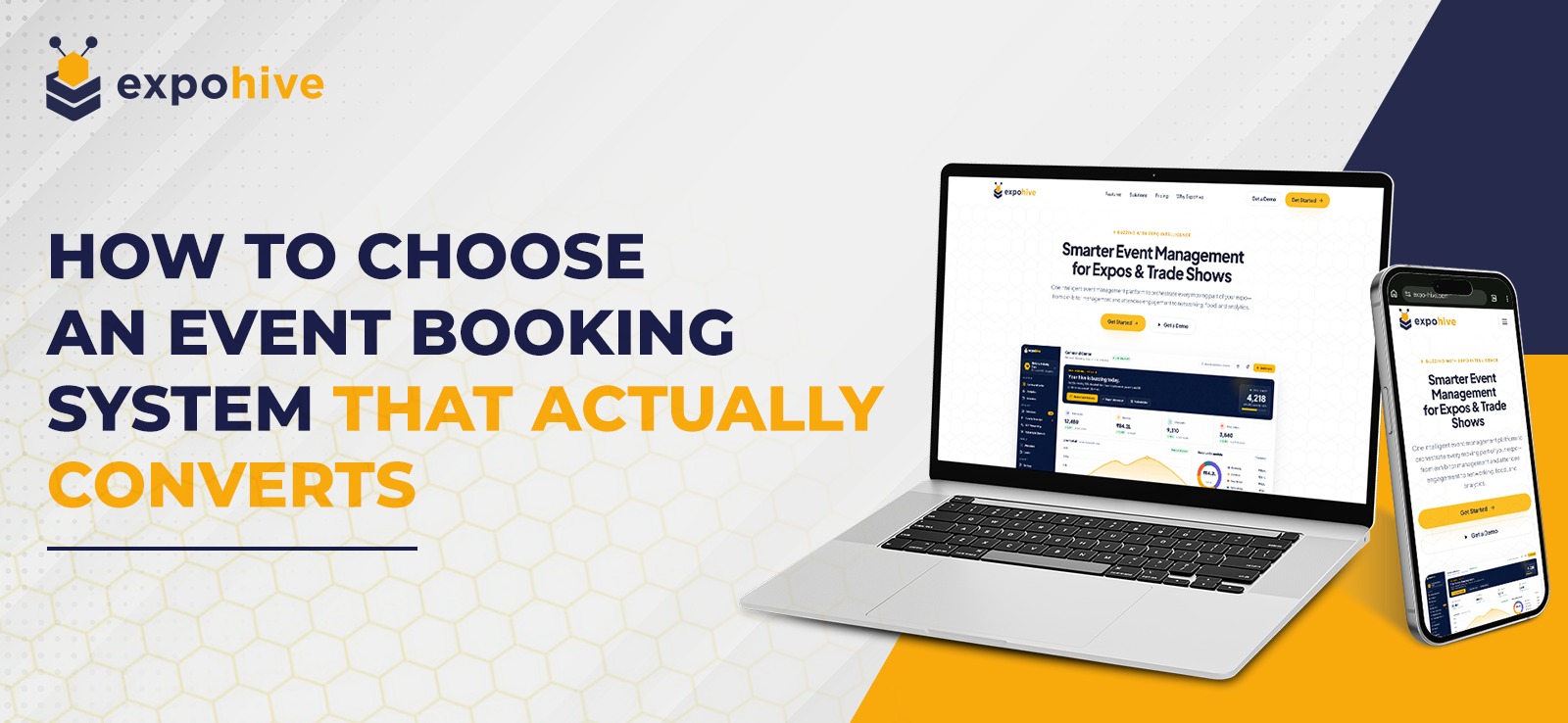
Expohive is a platform built to close exactly these gaps. With live floor plans, instant seat and booth availability, integrated payments, self-serve portals for exhibitors, and real-time booking analytics all in one system, it takes care of the friction points covered above, so organisers do not have to stitch together forms, emails, and payment links to get a booking confirmed.